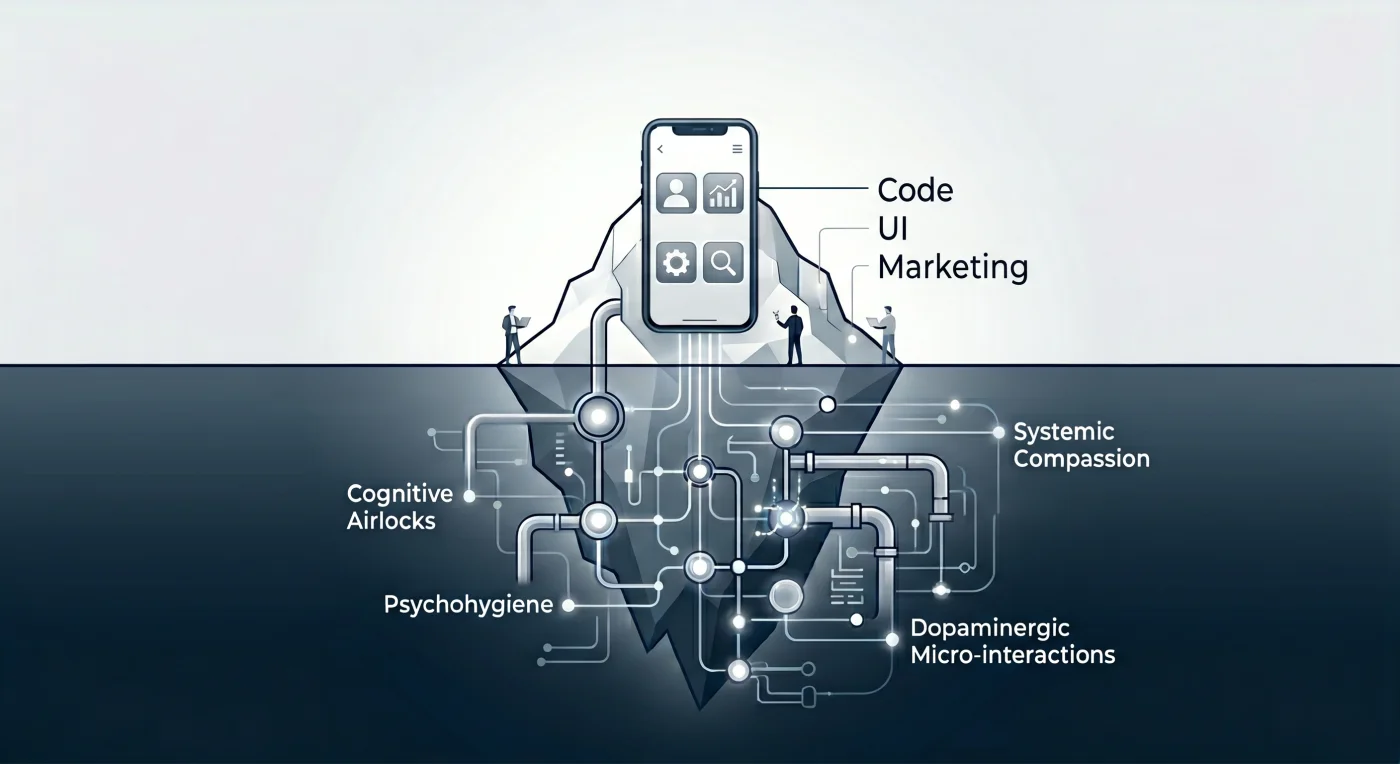
It is entirely normal for engineering teams to prioritise algorithmic efficiency, robust feature sets, and bug-free deployments. That is the baseline requirement of building software. Add a clean UI and a sprinkle of user acquisition magic, and theoretically, your product should be on a one-way track to success.
If only it were that simple.
In many agile startups, the approach is often: code, interface, a bit of marketing – go! Founders frequently spot a gap in the market and rush to fill it without conducting discovery user research. But treating human psychology as a secondary dependency creates a severe structural deficit. It is functionally similar to pouring a concrete foundation without mapping out the plumbing system.
Technically flawless products routinely experience massive user churn when they fail to account for the cognitive and emotional limits of the end user. Here is why behavioural strategy matters just as much as functional code.
Data can hurt
Imagine you are building a nutrition-tracking app. You use a standard colour-coding system for daily scores: red, amber, green for instant meaning decoding. When a user breaks their streak by logging a birthday cake, their dashboard turns red. The user is experiencing cognitive dissonance: they want to have a cake once in a while, but they also want to maintain a healthy diet. This way, you risk causing accidental data traumatisation.
The user will abandon the product to avoid the shame associated with breaking their streak, no matter how fast and efficient the system is. To maintain psychological safety for its users, the system must process very humane slips as neutral data points. People trying to improve their health already operate with high baseline anxiety. What they need now is systemic compassion, not automated judgment.
Speed vs. fluff
But if you are building a resource management tool, speed is your core psychological promise. If you overengineer the data entry process with unsolicited "magical" animations or not important prompts, users will churn out of impatience.
We need to keep in mind that people operate on biological frameworks guided by dopamine loops and personality traits. If you bombard a highly conscientious, precision-loving person with gamified confetti every time they log in, it would feel extremely patronising. However, a person lacking intrinsic motivation might require those dopaminergic micro-interactions to maintain adherence to a difficult task.
The Power of the "Cognitive Airlock"
Even the perfect feature will fail if the timing is wrong. Pushing a new feature announcement while a user is nervously trying to launch a presentation call will cause rage. Delivering the same notification while they wait for a video call recording to upload to the cloud provides welcome relief from boredom.
Deep Retention Methodology
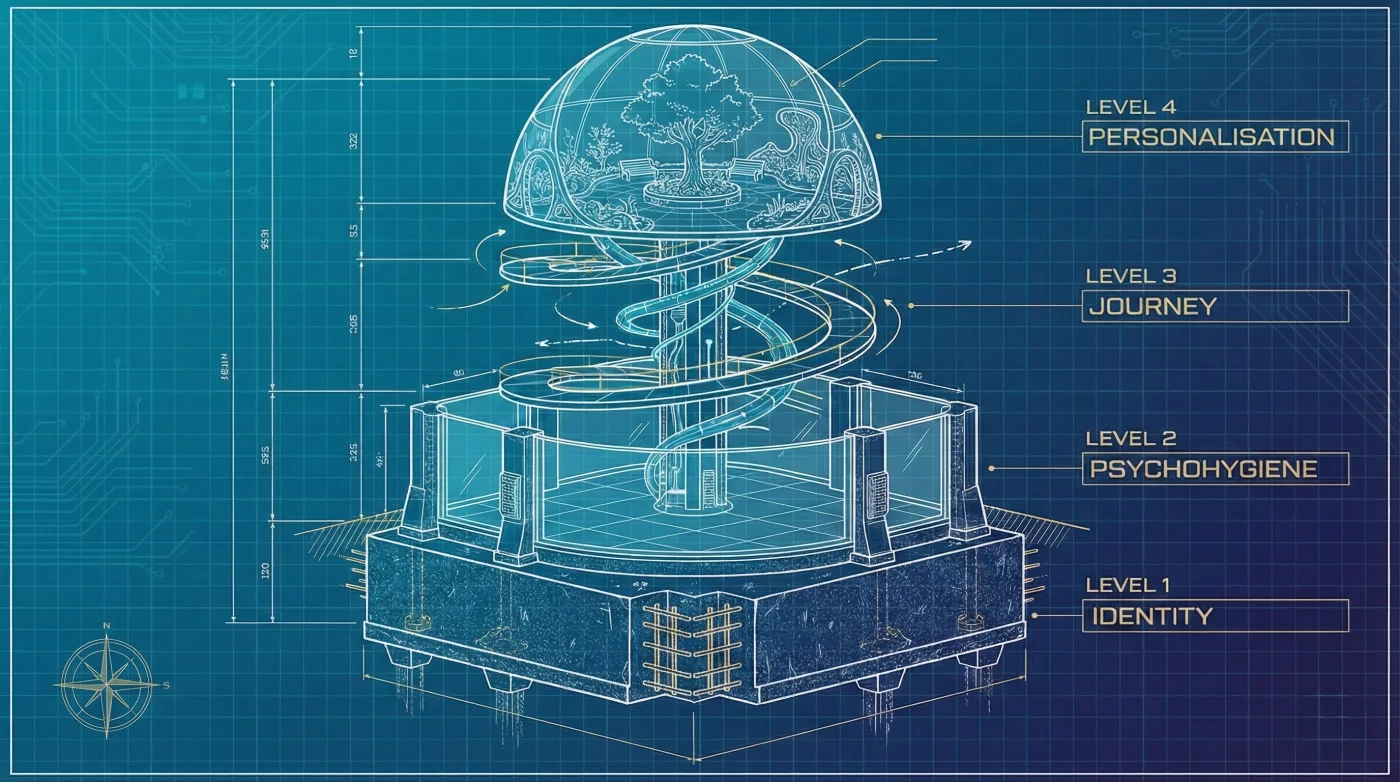
Retrofitting behavioural alignment into a "hardened infrastructure" costs more and greatly extends development timelines. To prevent this, embed psychological parameters into the product blueprint as early as possible.
You can use the "Retention Ladder" framework:
- Level 1. Define your psychological promise. Who are you to the user? A mentor? A healer? Understand the feeling users expect to derive from your workflow (for example, efficiency, compassion, or competence).
- Level 2. Adhere to psychohygiene. Set guardrails to protect the user’s emotional state, in line with your psychological promise, and reduce cognitive load and friction.
- Level 3. Map the journey timeline. Architect early wins to build users’ momentum, provide friction relief during the grinding middle phases of adoption, and architect a graceful offboarding sequence.
- Level 4. Hyper-personalise. Align system responses with user traits and current stress levels. A user near burnout requires a "Recover peacefully" state rather than a "Push harder!" prompt.
The Bottom Line
Products that respect cognitive limits and psychological safety extend user lifespan and improve the Lifetime Value / Customer Acquisition Cost ratio.
Plan the plumbing before you pour the concrete!